Showing posts with label entree. Show all posts

26.2.12

About Steamed Fish with Ginger and Scallions

Hi there. It's me. Sorry I left you hanging for a few weeks; we had our annual Super Bowl party at the house and ended up eating leftover dip for, like, ever. You know, as you do. But I'm back now with what is possibly my single-favorite entree ever, my mother's steamed fish. This isn't strictly speaking a Vietnamese dish, as I'm only half Vietnamese and I've taken one or two tiny liberties with the recipe over the years, but I think you'll agree it's super easy. But please note, you'll need some kind of steaming apparatus to make this work; I don't care what kind, just some set up that allows you to trap steam and then harness that steam to cook your dinner. This dish is totes Industrial Revolution, yo.

Here are the ingredients::

Fish
Any fish in any cut will do, whether it be whole trout or salmon steaks or tilapia filets, which is what I used here.

Soy sauce
Which you will add to the

Chicken broth
in equal parts. And what parts is that? Well, we'll get to that in a sec.

Scallions
Cut your scallions into about inch-sized rods. (Heh, I said rods.) And how many scallions should you cut up? Oh, I'd say about one bunch for every two servings. As the scallions cook they end up soaking up that broth you just made up there, mellowing out, and getting dang tasty.

Fresh ginger
Peeled, then cut up into little inch-sized matchsticks. And how much ginger should you cut up? Oh, I'd say about a thumb-sized knob for every two servings. As the ginger cooks it ends up soaking up that broth you just made up there, mellowing out, and getting dang tasty.

Some sort of pepper if you want
Like serrano or thai chilis or jalapeno like I used here. You know, for a touch of heat.

Some kind of oil if you want
Like peanut or sesame or canola like I used here. You only need like a tablespoon or so, and only to give the dish a bit of richness.

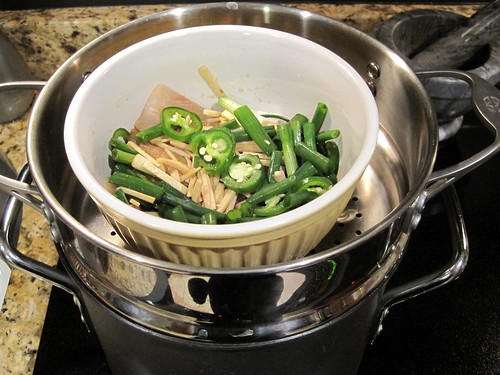
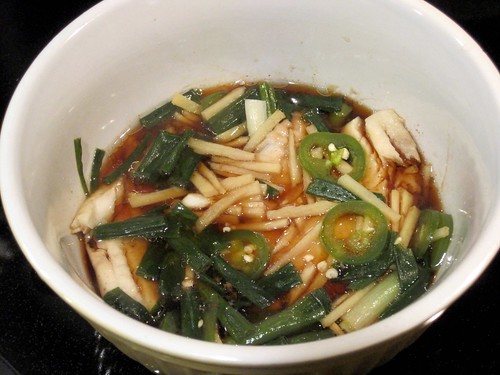
Got it? Well, here's what you should do with all that: Put your fish in a heavy, heat-proof bowl--something that can stand a good steaming. Throw the scallions, ginger, and pepper on top of that. Then add enough soy/broth until the liquid is barely covering your fish. Finally, swirl a little oil on top.


Slap on a lid, bring your pot of water to a rolling boil, and let that steam until the fish is done.


And when is your fish done? Depends on how thick your fish is. These tilapia filets only took about 12 minutes, but then again, these tilapia filets were only about a quarter-inch thick. So add extra time accordingly.


It is absolutely essential that you serve this over (preferably jasmine) rice, because all that broth in there is so freaking good. So put some rice on a plate, carefully (that bowl is hot!) top it with the fish, spoon out like a shit ton of broth and scallions and ginger, and maybe top with a bit of fresh cilantro if you want.


And if you want a lot of extra heat this pairs well with sambal. I promise it tastes better than it looks.

22.1.12

About Chicken Cacciatore

By now you've probably gotten the hang of the old put-chicken-in-take-chicken-out-put-chicken-back-in cooking thing that's been going on in these parts (cf. this and this), so this recipe should be so easy I won't even have to explain it to you. But I will, because Santa knows I do like to babble (no I don't).

Like our chicken bog before it, chicken cacciatore is almost endlessly flexible, and it's almost endlessly flexible because when Italians go out into the countryside or wherever to do their hunting, they don't have grocery stores I guess? I don't know, I think something got lost in translation. But the ingredient list that follows is just the basics, so feel free to add whatever other vegetables you want depending on what's in season or what you pick up at the grocery store because I assume you're not out in the Italian countryside where they have no grocery stores. Apparently.

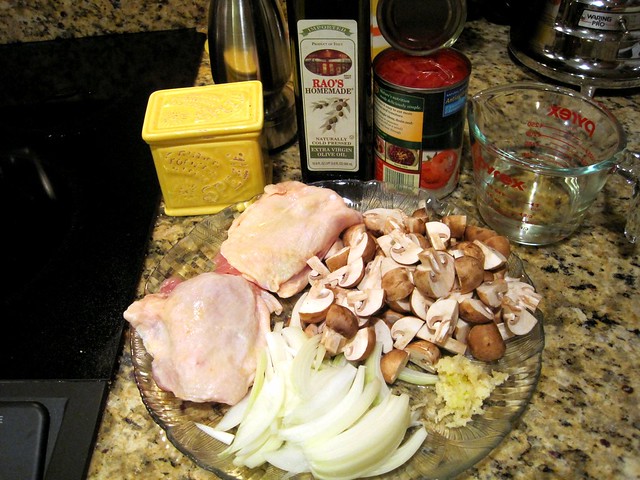
What you'll need is this:
  • 2 chicken thighs
  • 1 tablespoon extra virgin olive oil
  • ½ yellow onion, thinly sliced
  • 1-2 garlic cloves, minced
  • Salt and freshly ground pepper
  • ⅓ cup dry white wine
  • 1 can diced tomatoes


I also added a package of crimini mushrooms, cut into quarters. Also good: zucchini, summer squash, bell peppers, eggplant, uh... other vegetables.

Now, heat the olive oil in a large skillet over medium heat until it gets all shimmery. Generously salt and pepper both sides of your chicken and brown them off really well for about 4 or 5 minutes per side. Then, remove your thighs and put them on a plate for later.


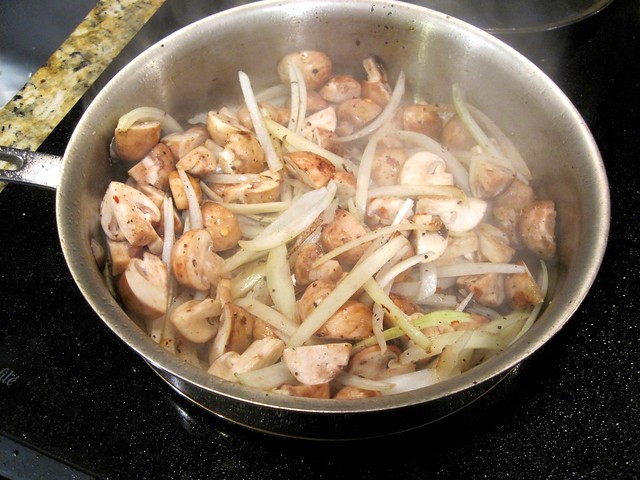
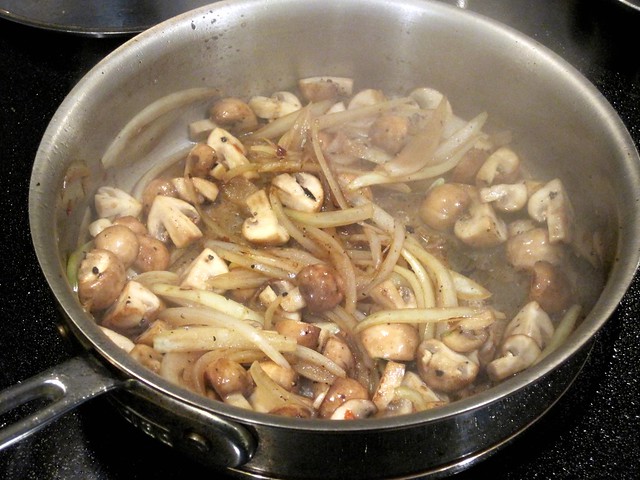
Add your onions and assorted veg to the pan like this:


and saute all that down until everything is softened and the onions have become translucent like this:


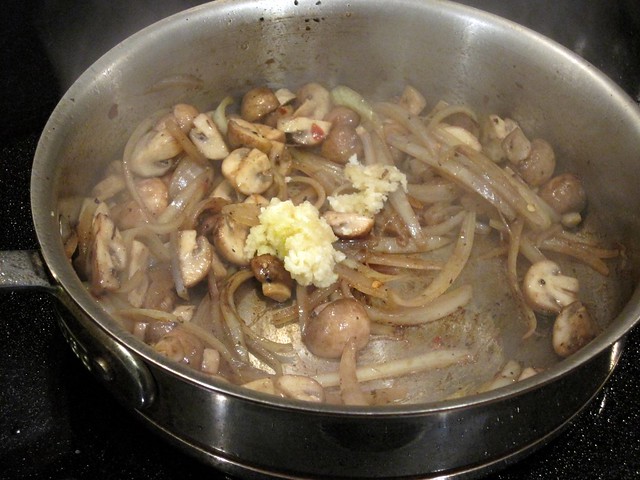
Add the garlic


and cook all that for up to a minute, then deglaze the pan with your white wine.


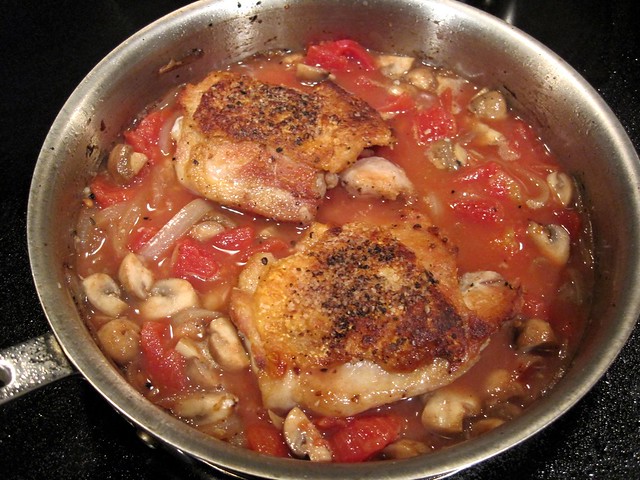
When the wine has mostly evaporated, add the can of tomatoes, with their juices. Give the pan a big stir to mix everything all up, then nestle the chicken thighs back in, skin side up.


Turn the heat down to a low simmer and braise the chicken for about 40 minutes, until your thighs are nice and tender and almost falling off the bone (TWSS or something).


Serve the cacciatore over a crusty loaf of bread or pasta or couscous or rice or polenta or WHATEVER ALREADY GOSH. And feel free to top that mess off with some fresh basil and parmesan cheese.


And as the Italian hunters say, Mangia!

15.1.12

About Chicken Bog

Well it hasn't exactly been quote-unquote cold in these here parts this season, but that doesn't mean you still don't need some down-home, rib-sticking, delicious Southern comfort food every now and again. And every time I'm feeling blue, you can bet this is what I'm making.

The beauty of this recipe is that it's infinitely adaptable. I mean, it's chicken and rice; every culture on the planet has a version (except those pesky vegetarians--what is UP with those people? (says the former vegetarian)). Mine started years ago with this Paula Deen recipe, and as you'll see it's morphed into something that may seem a little more sophisticated, but is really just a way to cram more vegetables in there (for the vegetarians, don't you know). Here goes.

For two hearty servings (plus lunch for somebody the next day), you'll--at a minimum--need:
  • 2-3 skinless chicken thighs
  • ½ cup chopped yellow onion
  • 1 tablespoon extra virgin olive oil
  • 2 teaspoons creole seasoning
  • ½ teaspoon cayenne pepper
  • 1 bay leaf
  • Salt and pepper to taste

and
  • 1 cup wild rice
  • 1 ¼ cup water, vegetable broth, or chicken stock

or
  • ¾ cup long grain rice
  • 2 cups water, vegetable broth, or chicken stock

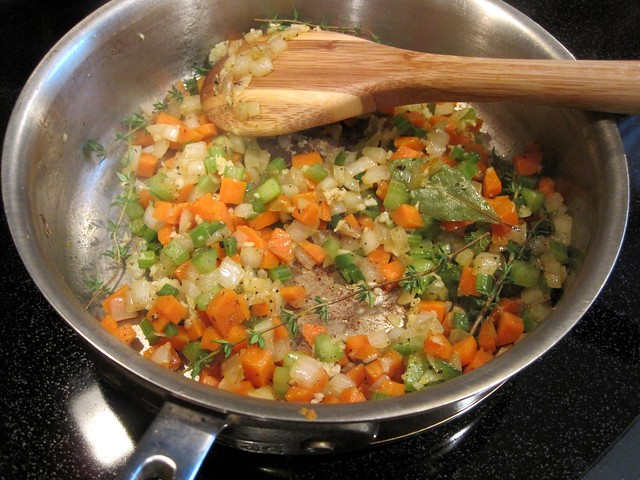
I generally start with a mirepoix of a carrot, a stalk of celery, and about half of a small to medium yellow onion. Oh, and some fresh thyme never hurt anyone:


And when I happen to have them on hand, I also like to add diced red bell pepper and fresh jalapeno. But as you can see, they're not essential. Tasty, but not essential.

Heat up the extra virgin olive oil in something with a lid, and saute your vegetables, herbs, and spices over medium-high heat until they've softened up. Then add your herbs and garlic and cook for about a minute more until your garlic becomes fragrant and you find yourself suddenly compelled to smear garlic all over your body but don't do that because that would be gross. And potentially deadly if you happen to be a vampire.


Next, deglaze your pan with a splash of white wine or sherry or even a little beer if you have it. If not, just go ahead and dump in your water or broth, making sure to scrape up all of those little brown crusty bits stuck to the bottom of your pan.

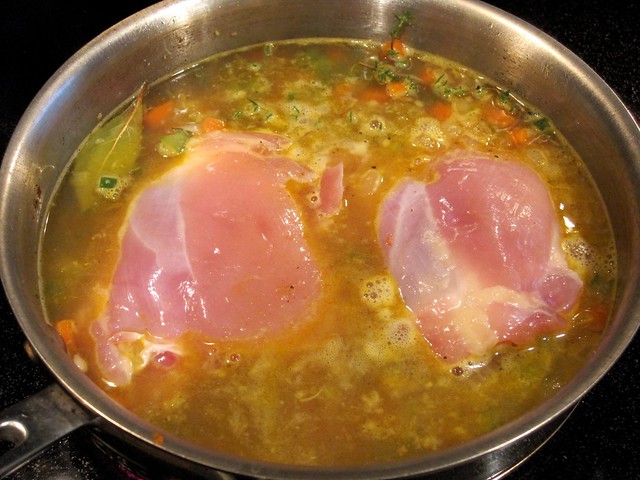
Bring your pot to a boil, then nestle your chicken thighs in that delicious brothy hot tub.


If you like it then you should a-put a lid on it (groan, sorry), then lower the heat and gently simmer for 30-40 minutes.

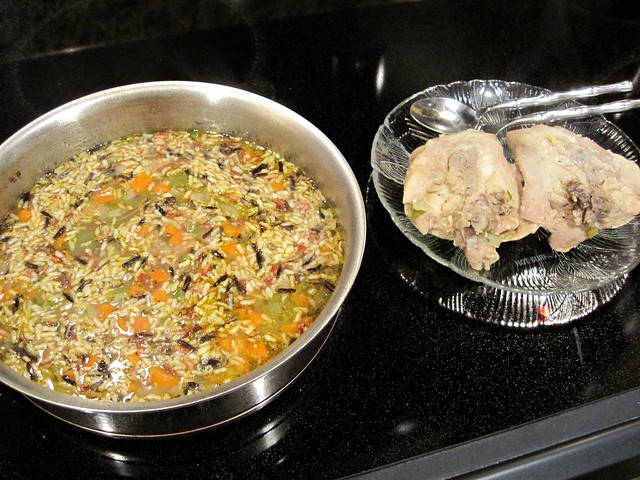
At this point your chicken should be mostly if not totally cooked (don't worry if it's not; so long as it's not still completely raw, which I'm not sure how that would happen but stranger things etc.) so you'll want to remove the pieces to a plate. Then, add the rice to the pan.


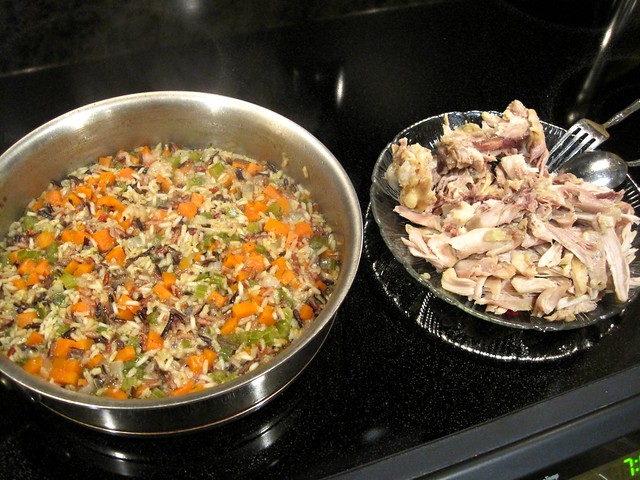
Let that bubble away for 10 minutes. Meanwhile, using a couple of forks or those folk-like things attached to your wrists, shred the chicken thighs.


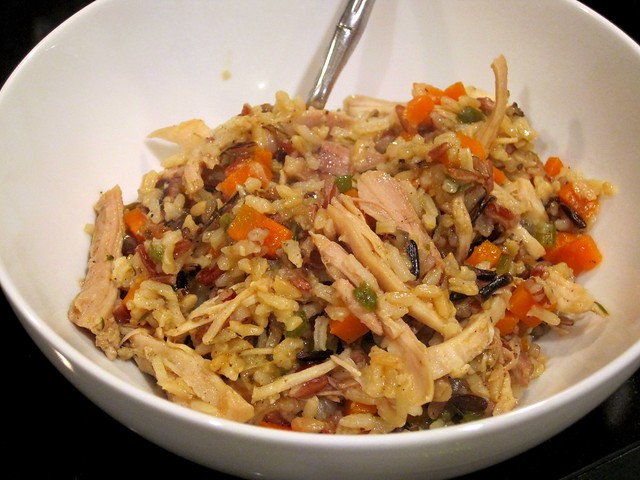
When the 10 minutes are up, add the shredded chicken meat back into the rice. This is the point where I like to clean the leftovers out of my fridge, so if I have any collard greens or mustard greens or turnip greens or kale or sauteed zucchini or squash or whatnot, I add that too. And then you just let that simmer for another 10 minutes while the rice finishes soaking up all that delicious broth.

Give the pot a little fluff job and serve with a little Tabasco on the side.


And dig in!

5.10.11

About Mirin-Glazed Salmon

There's not a whole lot to say about this recipe other than it's Winston-approved, which is weird because he has almost no interest in people food (we trained him good when he was a wee little baby).

Resistance is futile

(Sorry, I couldn't resist.)

Seriously though, unless it's, like, the water from a can of tuna (but not the actual tuna), the orange powder on a Cheetos Puffs Cheese Flavored Snack, butter, or olive oil, he wants no part of whatever you've got. Until, that is, I made this this other night, at which point he jumped up on the dining room table, started eating the salmon right off my plate, and when he was done with that, walked over to Seth's plate and started eating his salmon, too. (Diagram that, Sister Bernadette!)

Oh, and we also liked it.

Here's what you need for the marinade:

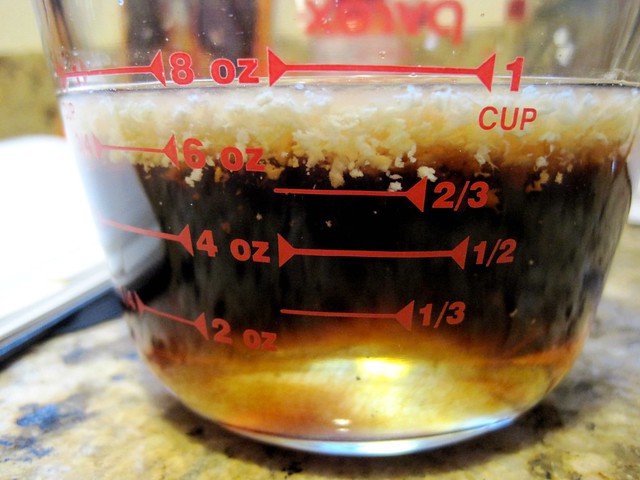
  • ½ cup mirin
  • ¼ rice vinegar
  • 2 tablespoons soy sauce
  • 1 tablespoon peeled and grated ginger

Which is this, all mixed up (don't know what to do):


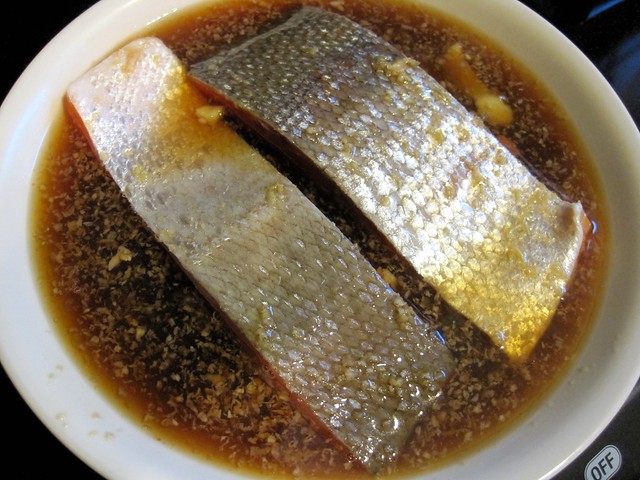
Then you just marinate your salmon fillets in there for at least 20 minutes like so:


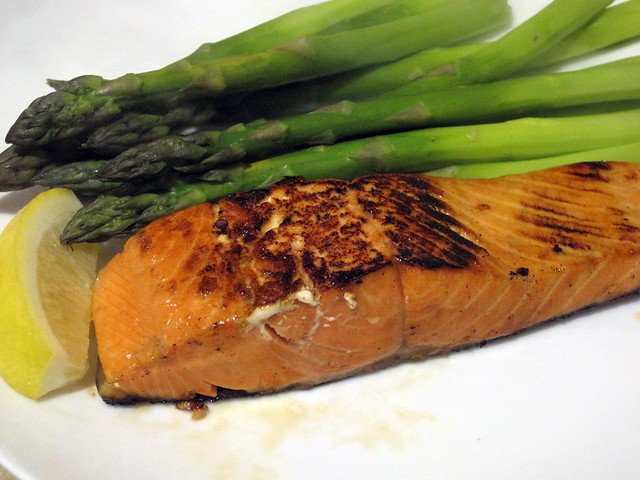
And when that's done you pat your fillets dry and then cook them like we did before until they look like this:


And then you try to eat it before your cat does.

26.9.11

About Meatloaf

I don't know if you ever get this way--I don't know your life--but sometimes I just really, really, really want meatloaf. Like, a lot. Like, more than I've ever wanted anything in my whole entire life (even more than that red Corvette Stingray I really, really, really wanted when I was ten). So what's a girl supposed to do? Why, make meatloaf of course!

But here's the thing; meatloaf is kinda tricky. I mean, not that it's super hard to make or anything (it is just a log of meat, after all), it's just that I tried making meatloaf for years and years before I settled on a recipe that was just right. And oh, how right it is. And, AND! you're in luck, because I'm a-gonna spare you those years and years of wandering the desert like some sort of traveling Wilbury and share with you my perfect, perfect meatloaf recipe.

First up, pour yourself a glass of wine. Like so:



Then, get your shit together. And that shit is:
  • 1 tablespoon extra virgin olive oil
  • ¾ cup finely diced onion (about half a medium onion)
  • ½ cup finely diced green pepper (about half a small pepper)
  • ½ teaspoon kosher salt
  • 1 teaspoon freshly ground black pepper
  • ½ tablespoon minced garlic
  • 1 pound ground meat of your choice
  • 2 slices sandwich bread
  • ⅔ cup barbecue sauce
  • 1 teaspoon chili powder
  • ½ teaspoon ground cumin
  • big pinch of cayenne powder
  • 1 egg

(Quick aside: I normally make this in all of its full-sized glory so's to have lots of leftovers for sammiches and stuff, but this time I only made a half batch, which is what you see here. For your full-sized loaf just double the recipe and follow the additional notes I'll try to remember to include below.)

Step The First (after the wine and the getting your shit together and whatnot): Preheat your oven to 350 F.

Now, here's your veg:
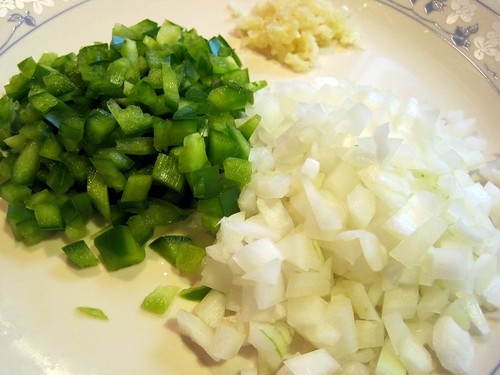


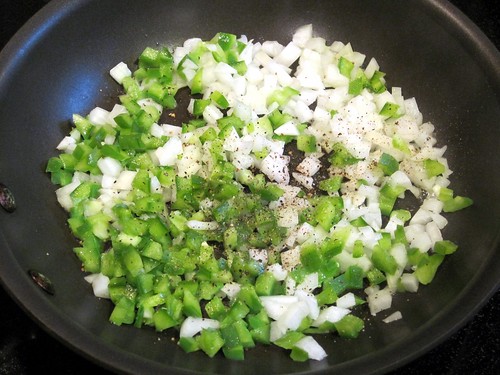
Heat up the olive oil in a medium skillet until it gets all shimmery, then throw in the onion/green pepper portion of your veg with a pinch of salt and pepper like so:


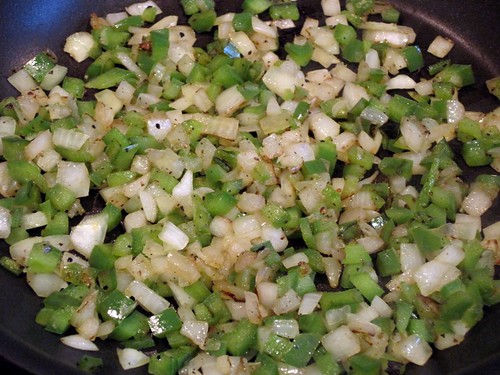
Saute that for a few minutes until your veg is soft and the onions have turned translucent like so:


Add in the garlic and stir that up for about 30 seconds, and then pull your pan off the heat while we talk a little bit about MEAT. (I don't know why I wrote MEAT like that; just seemed like the appropriate thing to do.) MEAT.

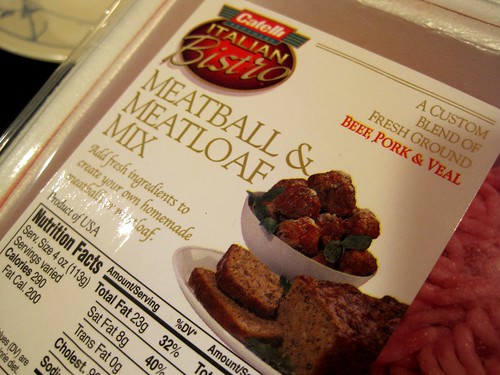
You can use any combination of ground meat you want for this really, just be aware that turkey and chicken will end up a lot drier than beef or pork. When I make a big meat log I usually use a pound of ground turkey and a pound of ground beef, but this time I found this magical package in the grocery store:


(And I also know that we could have a friggin' year-long conversation about the evils of the ground meat industry, so by all means, grind your own meat. I don't have a meat grinder because no one bought one for us off our gift registry so I guess we'll just take our chances since we haven't died so far as far as I can tell. I mean, who knows, I could be writing this from beyond the grave OMG AM I A GHOST? WTF.)

While we're talking, we might as well talk about barbecue sauce too. Now, I know I could make my own barbecue sauce from scratch--and you're welcome to do just that--but why would anyone do such a thing when this is in the world?



(Seriously guys, Dinosaur Bar-B-Que is so fucking good.)

Where were we? MEATLOAF. RIGHT.

So those slices of bread.
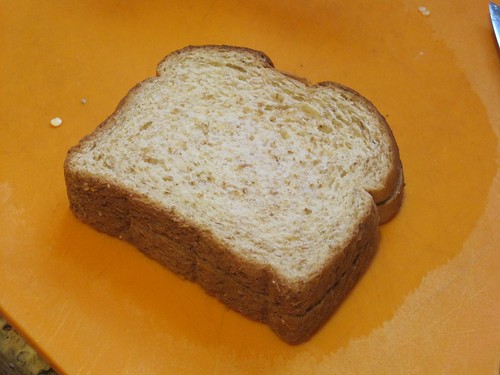


Those are the ones. Take them to the kitchen faucet and soak them down with water, the squeeze that water back out like you were squeezing a sponge.
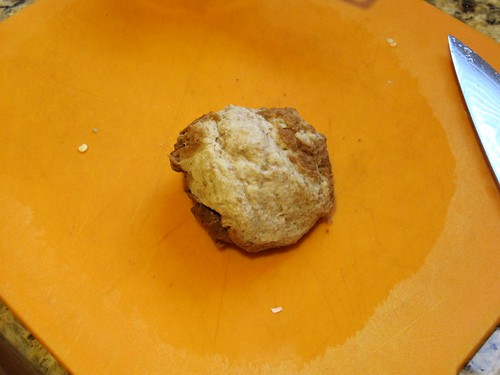


Yeah, like that. Now chop your bread spit-ball up into little pieces like so:
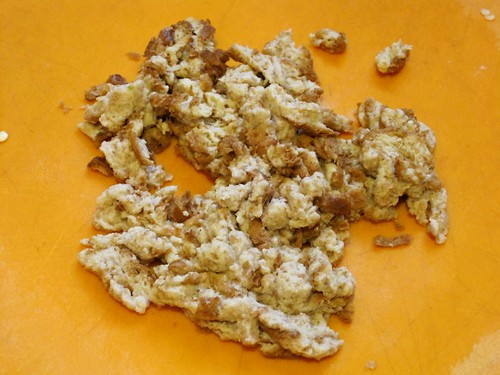


Fun!

And with that, we're ready to start assembling (initially I typed "assumbling" which sounds like a whole lot more fun whatever that is). Get a big bowl, and dump your meat in it. Then, dump in your sauteed vegetables.
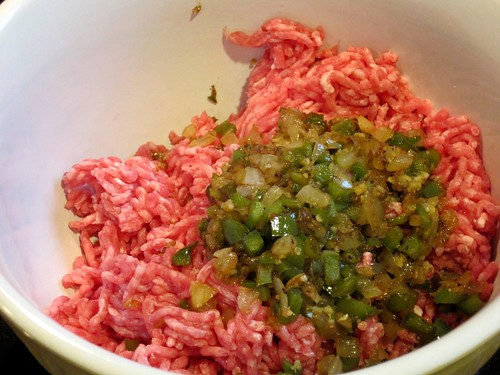


Then, get your hands in there and mix everything together. And this is where it really helps that you've gotten your shit together in advance, because after you add each of the next ingredients, you're going to have to mix everything together with your hands. With your shit together in advance, you won't have to keep washing your hands. Without your shit together in advance, you cover your kitchen in meat goo. I think the choice is clear.

So. Add the chopped up bread mush and mix.

Add most of the barbecue sauce and mix.

Add the spices and mix.

Add the egg and mix.

Everything should be all mixed up uniformly now, which will give us the perfect opportunity to talk about pans.

Here are the two pans I own:
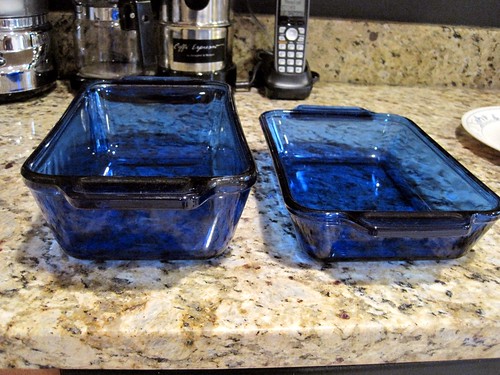


The one on the left is your standard 9 ½ x 5 ½-inch loaf pan, and is the one you should be using if you're making a full-sized loaf. Your meatloaf should completely fill this pan. The one on the right is some other weirdo pan that came with the set that's shallower and wider than a standard loaf pan, and it's what I'm using here. But since it's shallower, I didn't smoosh the meat all the way out to the sides; instead, I kept it tall and proud and loaf-like when I shaped it in the pan. Oh! Because that's the next step in the recipe: pressing your meatloaf mixture into the pan, and topping that off with your remaining barbecue sauce.
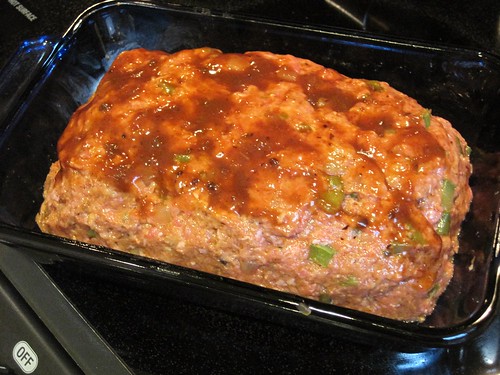


Then, pop that baby (but not your actual baby) into the oven and bake for 45 minutes (an hour and a half for the full-sized loaf).

When it's done, take it back out of the oven and let it sit for about 20 minutes, if you can wait that long.
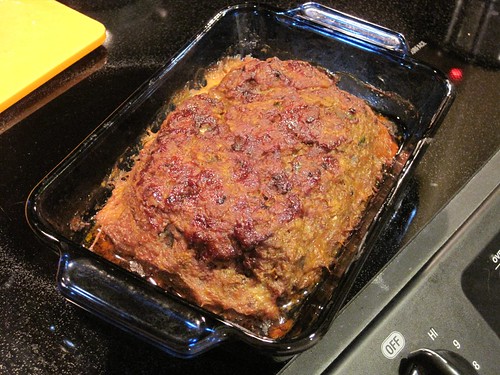


Because believe me, the smells that will start filling your house are liable to make you want to chew your own arm off. I'm drooling just thinking about it. Oh man.

ANYWHO. When you're ready to serve, just pour off any fat that may have accumulated in the pan and slice the loaf into thick slabs of meaty goodness. Serve with more barbecue sauce, or ketchup, or A-1 (my condiment of choice), or whatever it is you like or nothing at all because have I mentioned this before? This is SO GOOD.
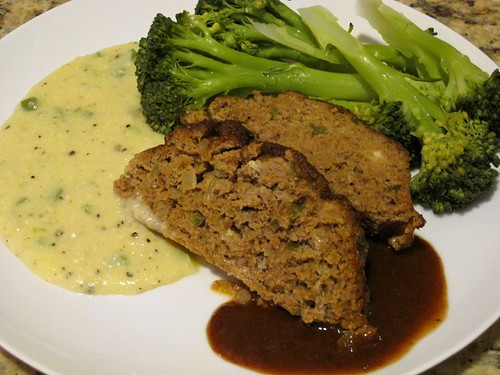


(And yes, those are my cheese grits. ALSO GOOD.)

26.7.10

About Cold Noodle Salad

Somethong (okay, I could fix that typo but COME ON) about the words cold, noodle, and salad together in a row like that strikes me as... funny? Odd? Somethong? Anyway, let’s get on with it, eh?

How about that thunderstorm, hey? That was some insane shit, I’ll tell you what. Winston was mesmerized by everything blowing around all over the place, and spent the majority of yesterday afternoon with his nose pressed to the window. But I guess that’s what happens when a (relatively) cold front smashes into HOT AS BALLS. (Incidentally, I tried to sit out by the pool on Saturday but my skin melted off after 37 seconds. True story.) Thankfully it’s no longer HOT AS BALLS, but it’s still pretty damn hot out there, so we’ll continue with our tour of dishes that do not require much if any use of heat-creating kitchen equipment. Hence the aforementioned cold noodle salad.
This is a recipe in two parts. We’ll tackle the noodles first. For four, healthy-sized servings you’ll need:
  • A little more than half of a box of whole-wheat spaghetti
  • 1/4 cup water
  • 3 tablespoons soy sauce
  • 2 tablespoons canola oil
  • 2 tablespoons rice wine vinegar
  • 2 teaspoons dark sesame oil
  • 2 teaspoons freshly grated ginger
  • 1 teaspoon sugar
  • 1 teaspoon crushed red pepper
  • 3-4 cloves of garlic, minced
  • 1 tablespoon peanut butter
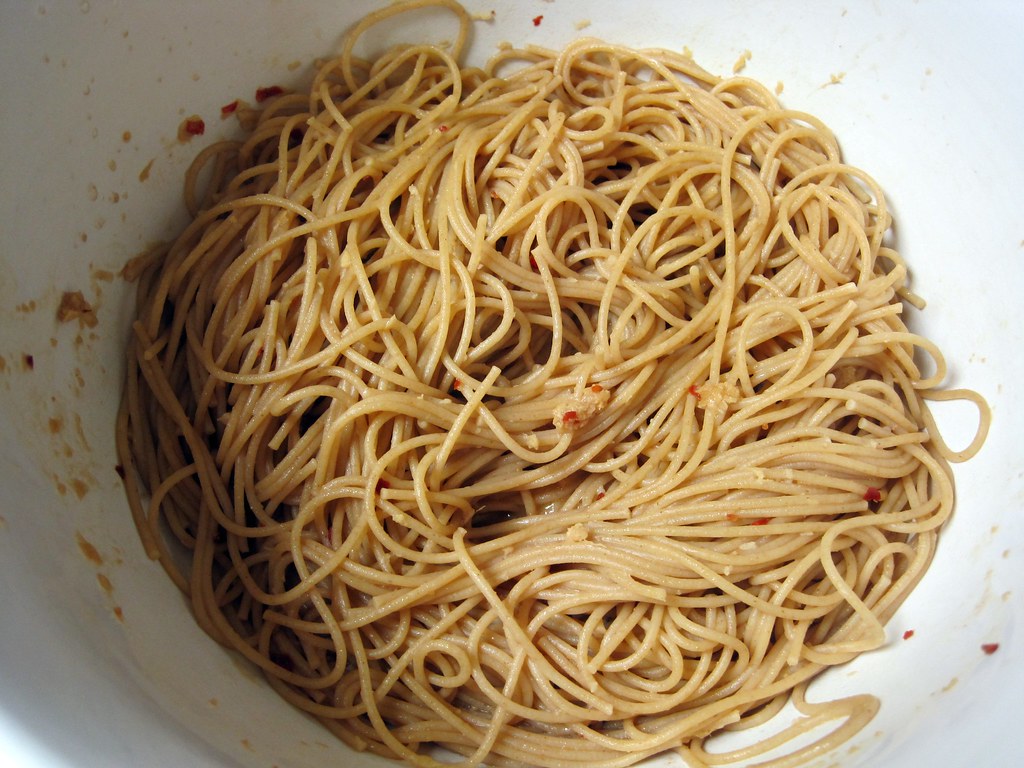
Cook the pasta according to the directions on the box. While that’s boiling, mix up the rest of the ingredients in a big bowl to make your dressing.


When the pasta is cooked, drain it, then rinse it in cold water to stop the cooking process. Drain again and toss the noodles with the dressing in your big bowl.


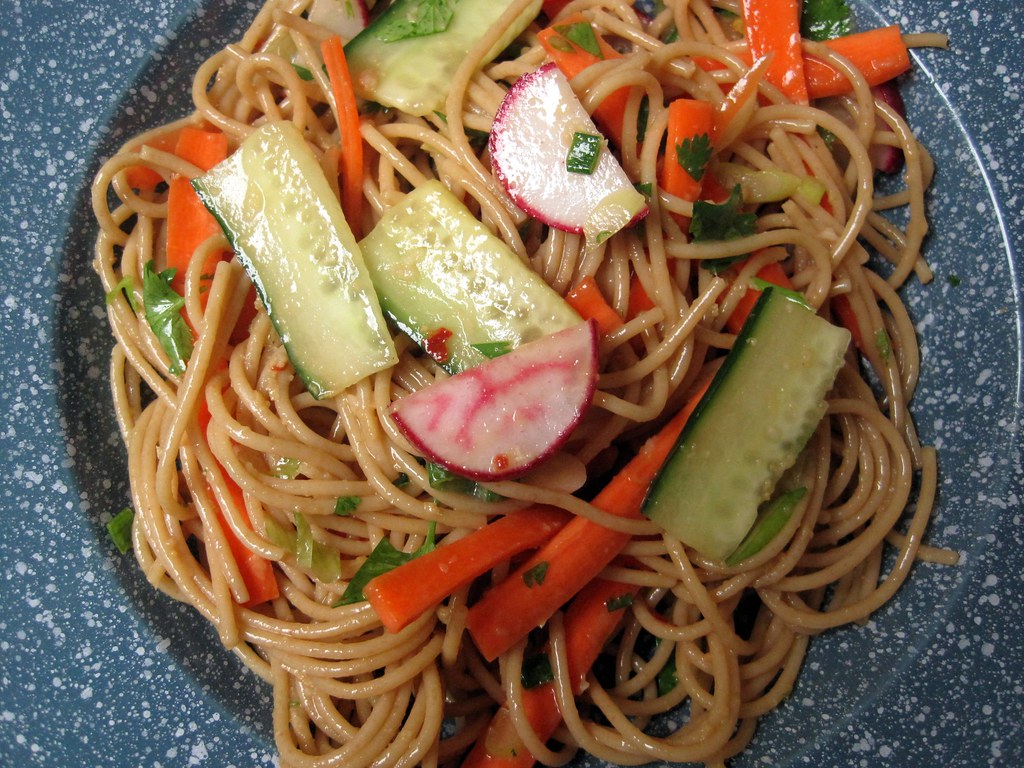
Then pop that big bowl in the fridge while we tackle the “salad” portion of our cold noodle salad, which consists of approximately 3 cups of whatever veg you like.


This is what I brought home from the farmers market: carrots, cucumbers, radishes, cilantro, and scallions. Other veg that would be good: baby bok choy, mushrooms, cherry tomatoes, broccoli, cauliflower, etc., etc., etc. BASICALLY, you just want to make sure your approximately 3 cups of veg is cut pretty thinly so that twirling everything onto a fork is no big whoop.

Now toss all that together with your big bowl of dressed spaghetti.


Now you have a choice: you can either serve it right away at room temperature, or you can park that baby in the fridge for an hour or so for it to chiiiiiiiill. Either way, you probably can’t go wrong.

Probably.

9.4.10

About Poached Salmon

Can you put things in a pile? Yes? Then you can make poached salmon! Because literally (not figuratively), all you need to do for this recipe is put your ingredients in a pile. You know, until you get to the sauce part. BUT WE'LL WORRY ABOUT THAT LATER.

Ahem.

Let's begin at the beginning, and the beginning is where we gather up the necessary ingredients:
  • 1 lemon
  • 2 tablespoons of freshly chopped parsley leaves, stems saved
  • 2 tablespoons of freshly chopped tarragon leaves, stems saved
  • 1 small shallot, minced
  • 1/2 cup dry white wine
  • 1/2 cup water
  • 2 single-portion-sized salmon fillets (hopefully of about even thickness so they cook at the same time)
  • 1 tablespoon of capers, rinsed and roughly chopped
  • 1 tablespoon of honey
  • 2 tablespoons of extra virgin olive oil
  • salt and pepper to taste
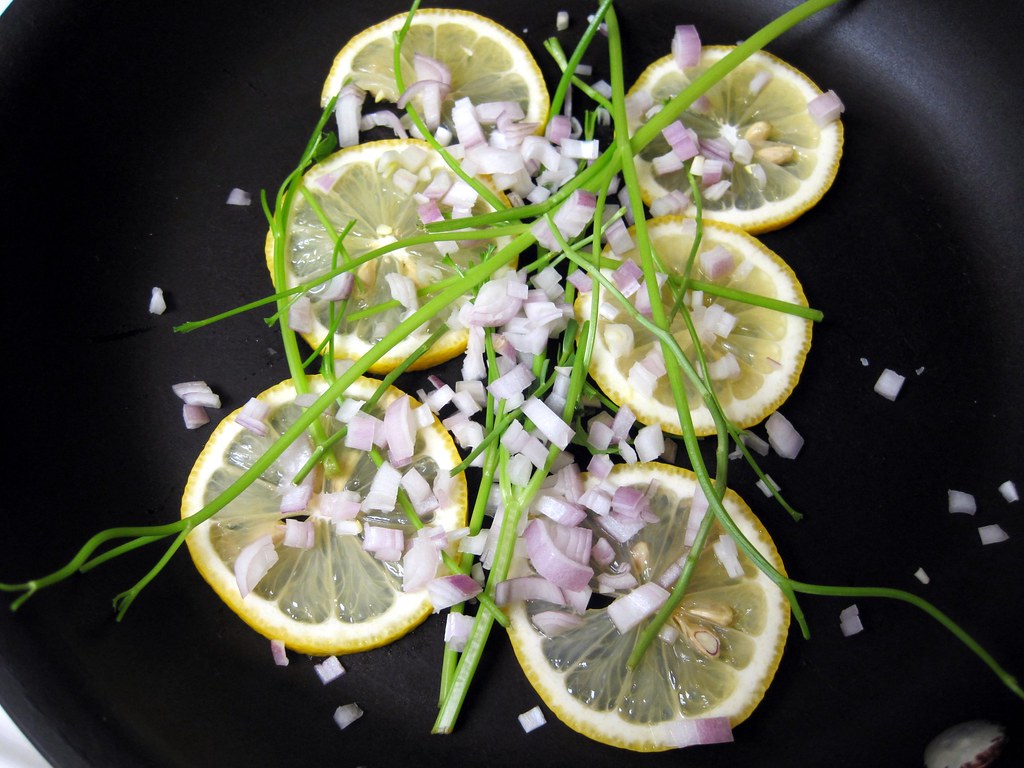
Cut about 6 1/4-inch slices off of your lemon and arrange them in a single layer across the bottom of a 12-inch skillet (for which you hopefully have a lid, otherwise you are effed). Then pile the parsley and tarragon stems, and half of the minced shallots on top.


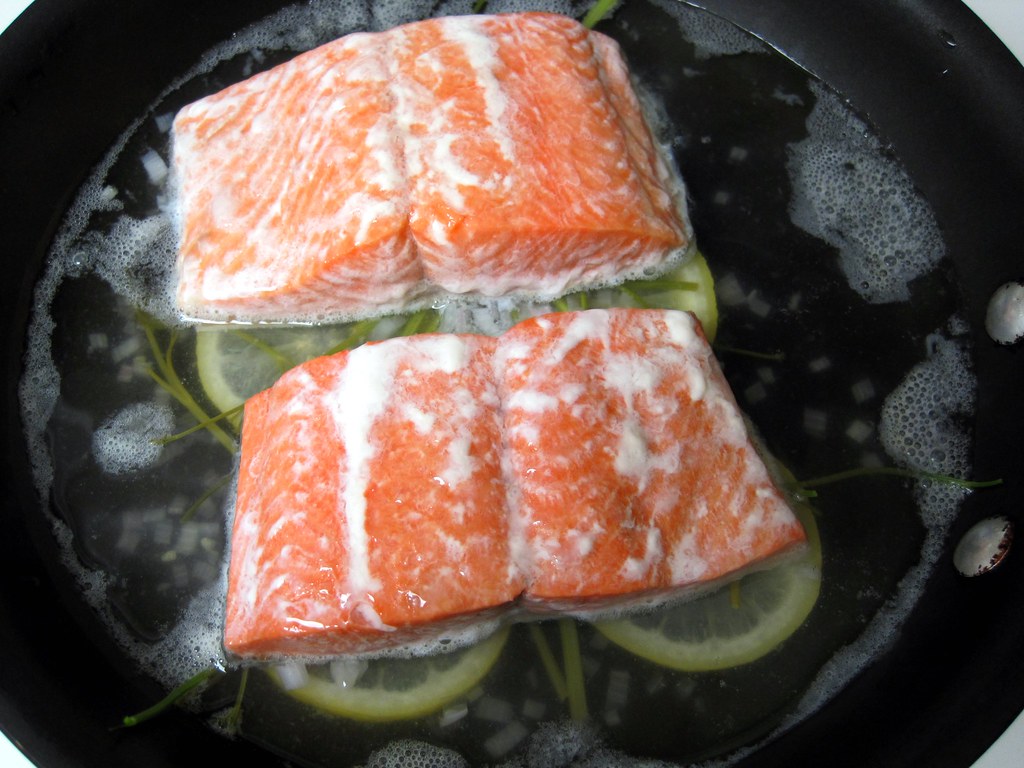
Place the salmon fillets on top of the pile (he's king of the world!) and add the wine and water to the pan.


Bring the water and wine to a simmer over high heat, then reduce the temperature to low, cover the pan, and let that cook until it looks cooked. This should tale about 9-14 minutes, depending on how thick your fillets are.


(And now I'll be like the Beastie Boys and drop some science on your ass! The white stuff that forms all over your salmon--and lobster, for that matter--is simply coagulated albumin. And what is albumin, you ask? Well, albumin is a water-soluble protein that denatures under heat. Which basically means that it coagulates. Just like an egg white! And thus concludes today's science/Beastie Boys lesson.)

When the salmon is cooked, remove it (with the lemon slices) to a paper towel-lined plate and tent it loosely with aluminum foil.

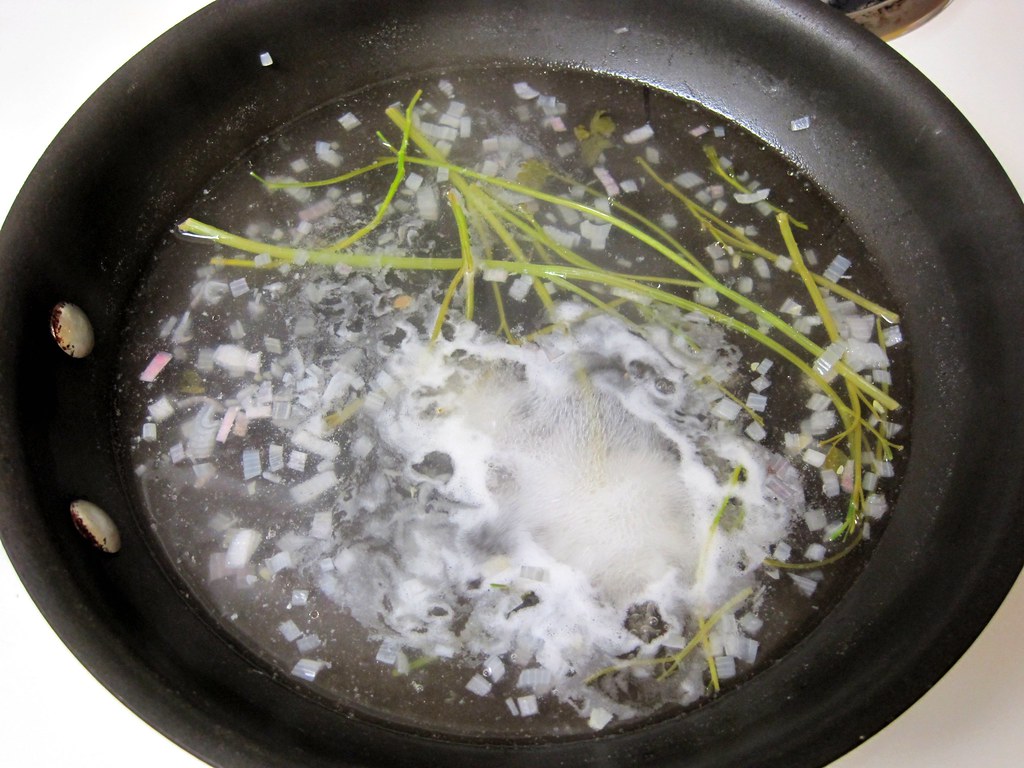
Return the pan (with the remaining liquid) to high heat and simmer that down until it has thickened slightly and reduced to about 2 tablespoons.


Guess what? IT'S LATER. So mix the rest of your shallots, chopped herbs, capers, honey, and olive oil in a bowl.


When the poaching liquid has reduced, strain it into the bowl with all that stuff I just mentioned and whisk it all up to combine. Add salt and pepper until you're happy with it.

Then plate your salmon! (If your fillets are NOT skinless, an easy way to remove the skin before serving is by sliding a thin, wide spatula (exactly like a fish spatula) between the flesh of the fillet and the skin until it's separated.)

Sprinkle a little salt and pepper over each fillet and top it with a little of the sauce you just made. Add a wedge of lemon on the side for (lovin' touchin' and) squeezin' purposes.


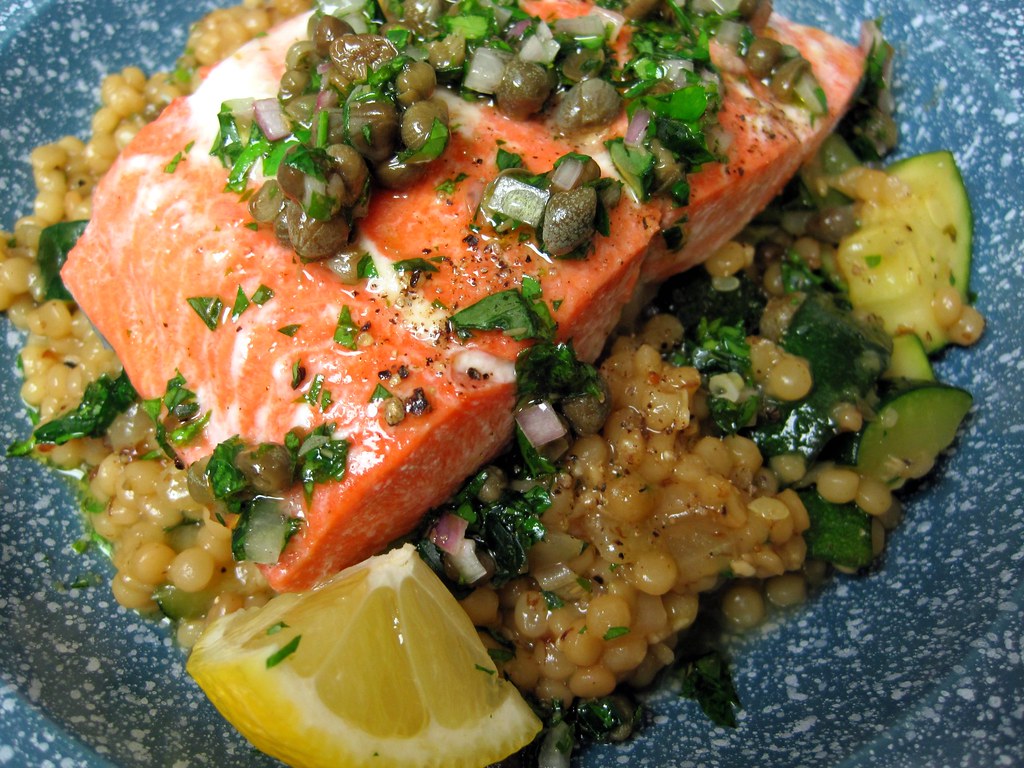
Here, I put my fish right on top of some Israeli couscous, but you can put your fish on top (or on the side) of anything you like. That's what's so great about cooking! If you don't like it, don't do it!

6.3.10

About Oven Roasted Shrimp with Tomatoes and Feta

One of the things we generally always have in the freezer is a bag of frozen shrimp. There are many reasons why we generally always have a bag of frozen shrimp in the freezer, but I'll only bore you with four: (1) shrimp is easy to cook, (2) and it does so real fast like, (3) plus it's delicious, and (4) the "fresh" shrimp you buy in the seafood department of your local supermarket is just defrosted frozen shrimp anyway. And just to make life easy, we always buy the frozen shrimp that's been deveined, but still has the shell on, because I like to keep the shells in a bag in the freezer and then make stock out of them. But you don't have to do that if you don't want to, because I do realize that it's weird to keep a bag of shrimp shells in one's freezer. It sort of seems a few steps shy of keeping, like, eyeballs in the freezer or something equally as morbid. But ANYWAY.

SHRIMP PRIMER!

Shrimp are sold by count, which basically means that you'll see a sign or a label or something that will say, like 12-15 count, or 35-40 count, or some other set of numbers. Those numbers tell you how many shrimps will make up one pound. So, if you buy a bag of 12-15 count shrimp, 12-15 shrimps will weigh one pound. The smaller the shrimp the less time they'll take to cook, and I don't really like to buy super tiny shrimp because they're kinda not worth it. For this recipe anything in the 20ish range will work.

Defrosting your shrimp is also super easy. Either let your frozen shrimp defrost in a bowl in the fridge overnight, or put them in a colander under a steady stream of cool water until they're all ready.

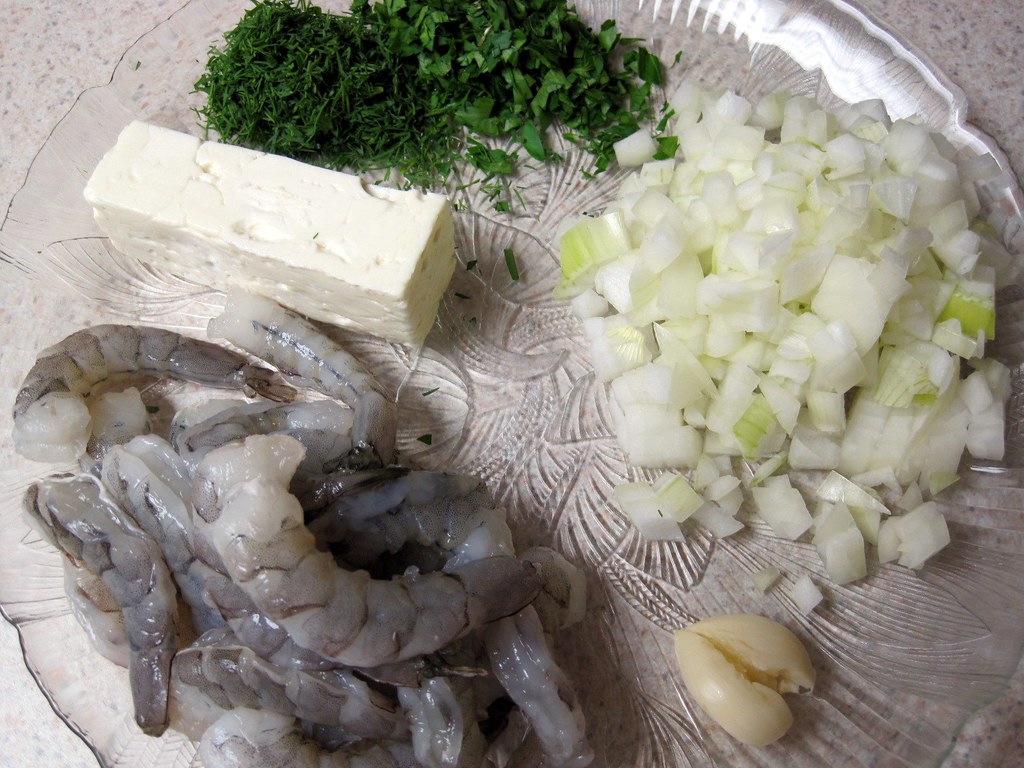
Ready? Mis en place!

This recipe definitely qualifies as easy, fast, and delicious. And the only other thing I want to mention is that it is well worth splurging on a good quality feta cheese. It makes all the difference. Also, don't buy the pre-crumbled feta; it doesn't melt too hot. For 2 servings you need:
  • 1 1/2 teaspoons olive oil
  • 1/2 medium onion, chopped
  • 1 clove garlic, minced
  • 1 can of diced tomatoes
  • 1/8 cup minced fresh parsley
  • 1 tablespoon fresh dill, minced
  • 3/4 pound raw shrimp, peeled and deveined
  • salt and pepper to taste
  • 1/3+ cup feta cheese, crumbled


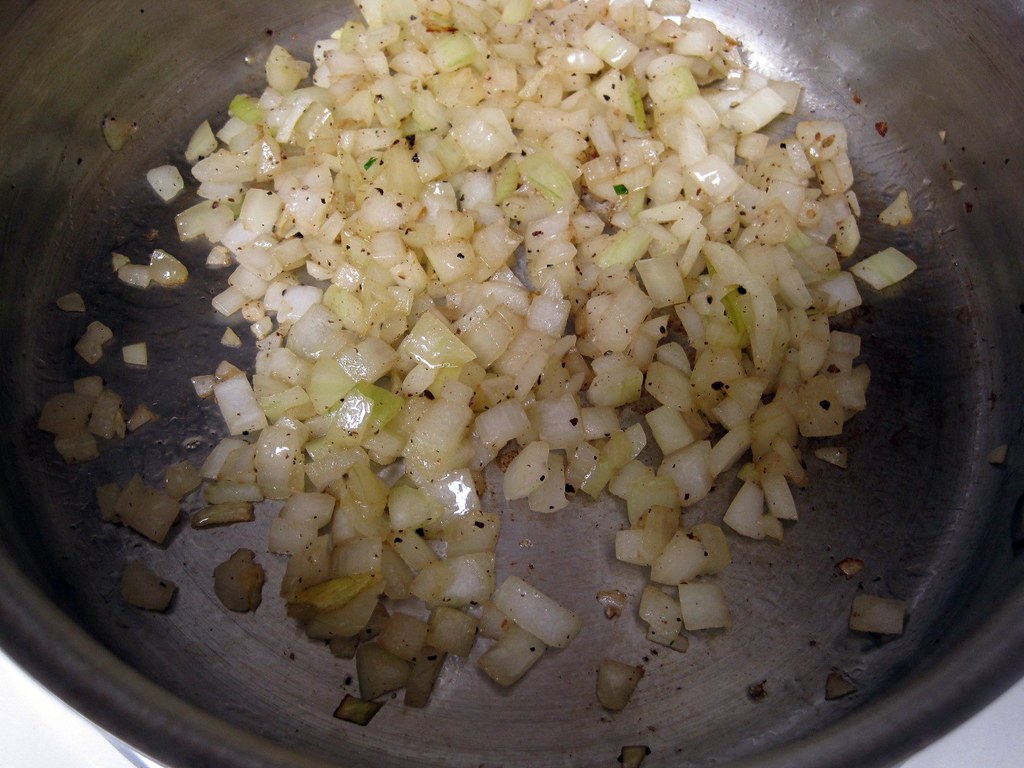
Preheat the oven to 425°F. In a large, oven-proof skillet heat up your olive oil over medium high heat, and saute the onions for 3-5 minutes until they are softened. Then, add the garlic and cook just until you can start to smell it, about 30 seconds more.


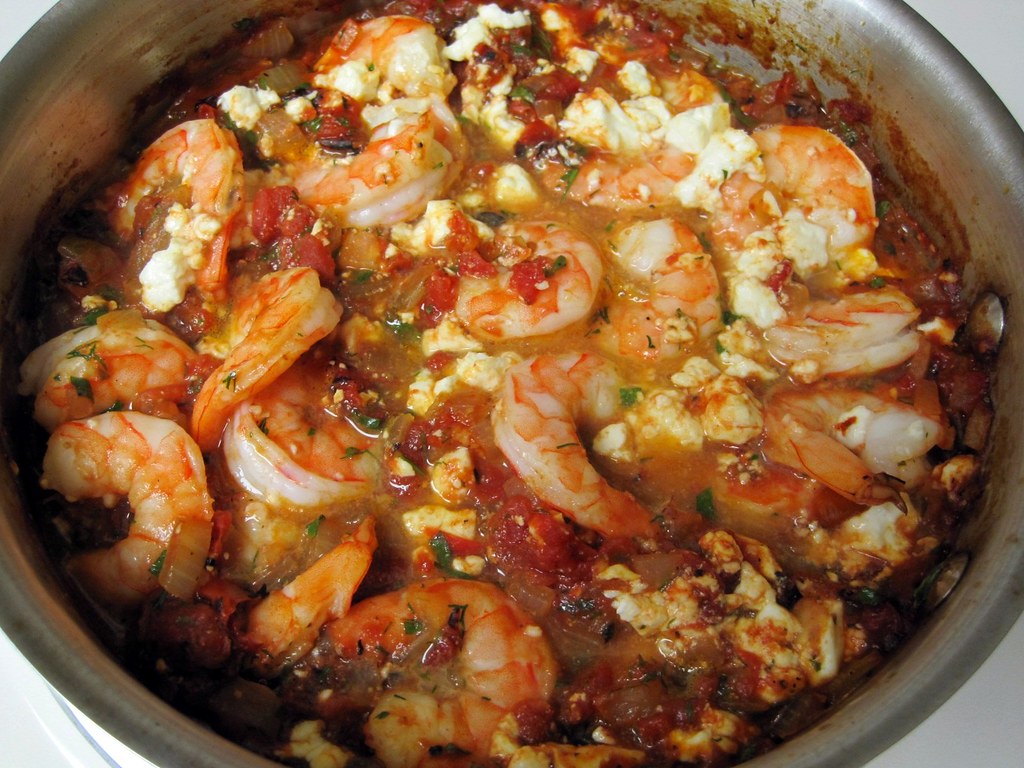
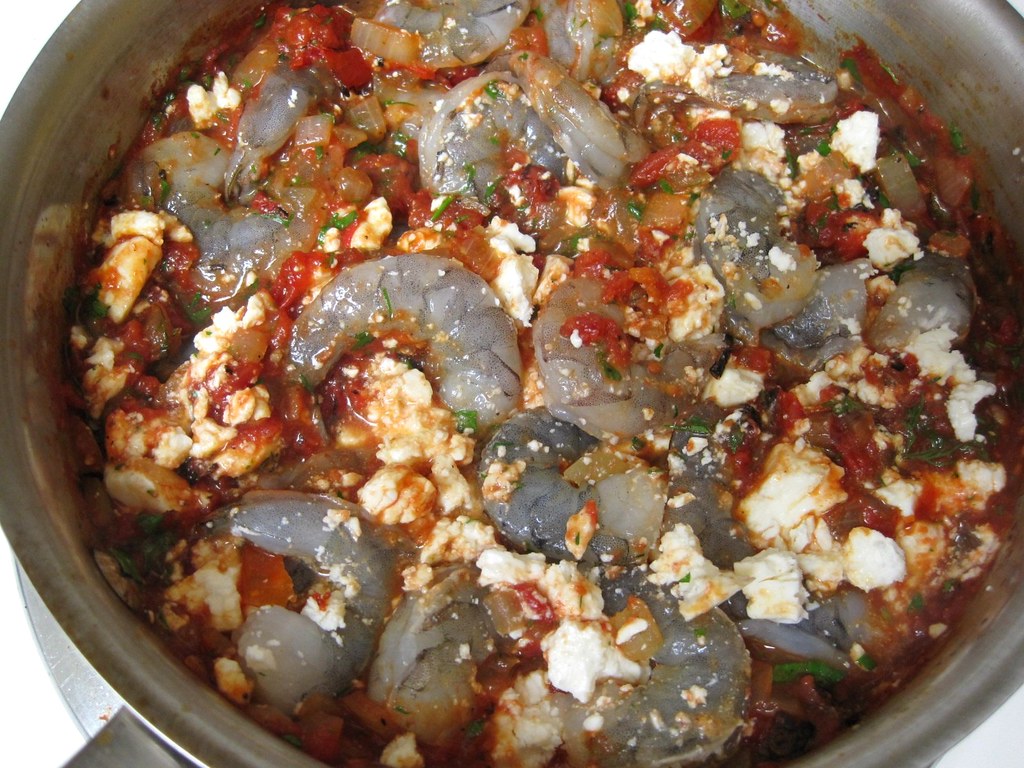
Add the tomatoes and bring them to a simmer. As soon as it starts getting bubbly reduce the heat to medium low and let that continue to bubble away for another 5-10 minutes until the juices thicken a bit. Now remove the pan from the heat. Stir in the herbs, shrimp, feta cheese, and a little salt and pepper to taste.


Now place the pan in oven and bake, uncovered, until the shrimp are cooked through. This should only take about 10-12 minutes.


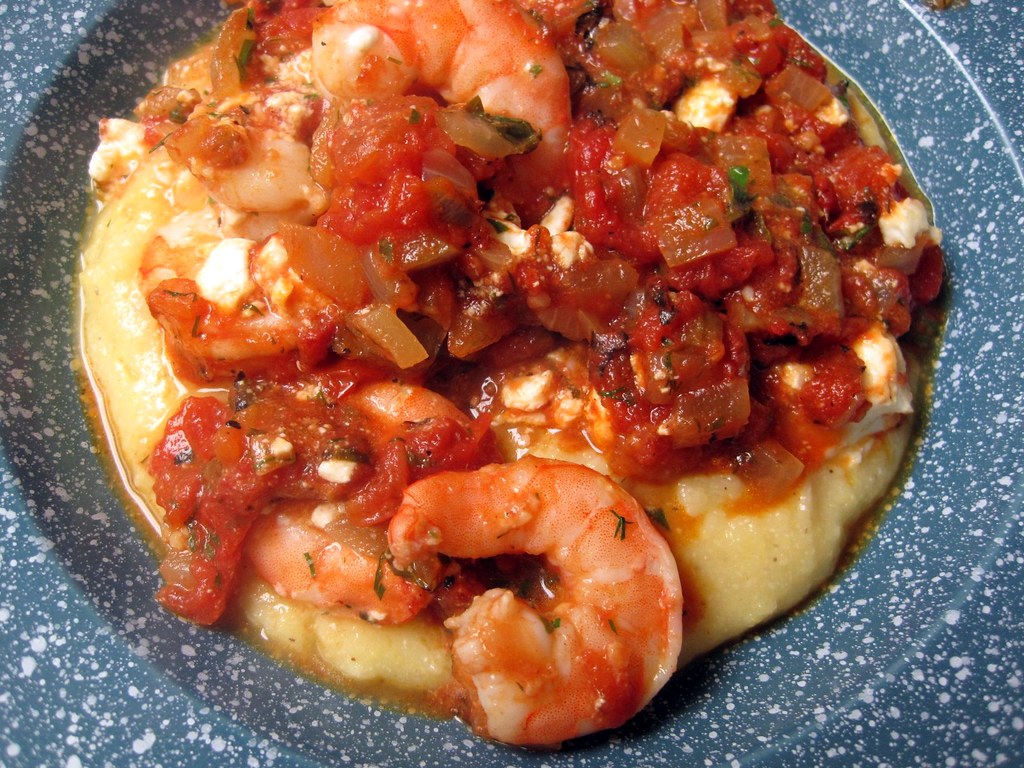
And, uh, that's about it. I like to serve mine over polenta, but this could easily be eaten with pasta or rice or couscous or with nothing more than a big ol' loaf of french bread.


This recipe is so good, y'all. Promise me you'll make it, okay?